Problem Solving Skills
What Does Problem Solving Look Like?
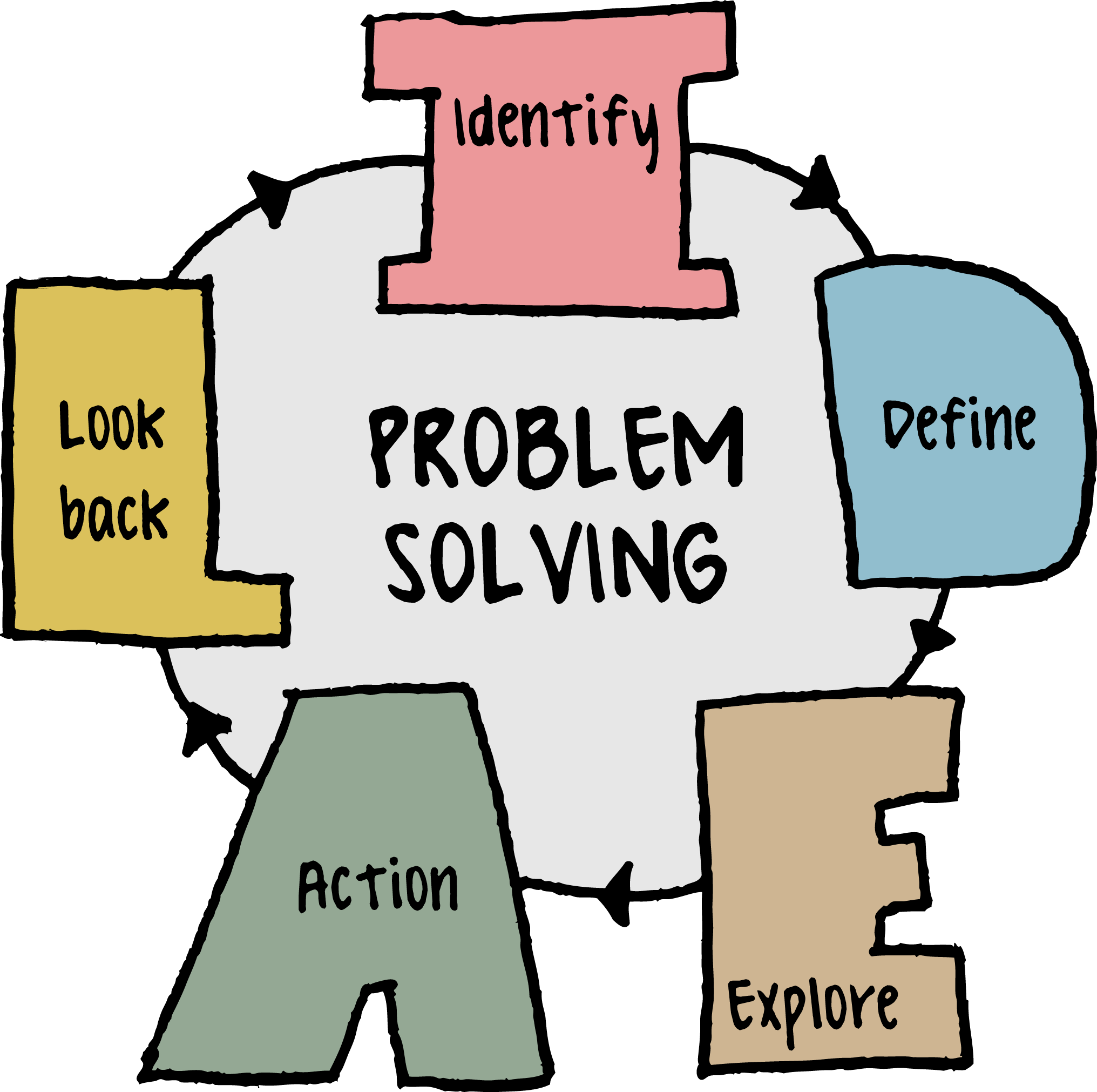
The ability to solve problems is a skill, and just like any other skill, the more you practice, the better you get. So how exactly do you practice problem solving? Learning about different problem solving strategies and when to use them will give you a good start. Problem solving is a process. Most strategies provide steps that help you identify the problem and choose the best solution. There are two basic types of strategies: algorithmic and heuristic.
Algorithmic strategies are traditional step-by-step guides to solving problems. They are great for solving math problems (in algebra: multiply and divide, then add or subtract) or for helping us remember the correct order of things (a mnemonic such as “Spring Forward, Fall Back” to remember which way the clock changes for daylight saving time, or “Righty Tighty, Lefty Loosey” to remember what direction to turn bolts and screws). Algorithms are best when there is a single path to the correct solution.
But what do you do when there is no single solution for your problem? Heuristic methods are general guides used to identify possible solutions. A popular one that is easy to remember is IDEAL [Bransford & Stein, 1993] :
- Identify the problem
- Define the context of the problem
- Explore possible strategies
- Act on best solution
- Look back and learn
IDEAL is just one problem solving strategy. Building a toolbox of problem solving strategies will improve your problem solving skills. With practice, you will be able to recognize and use multiple strategies to solve complex problems.
Watch the video
What is the best way to get a peanut out of a tube that cannot be moved? Watch a chimpanzee solve this problem in the video below [Geert Stienissen, 2010].
Idea Log
Describe the series of steps you think the chimpanzee used to solve this problem.
Think of an everyday problem you've encountered recently and describe your steps for solving it.