Improving Observation Skills
Safety in the Workplace
Being observant and paying attention at work is essential for safety. In 2013, the Bureau of Labor Statistics reported 476,700 cases of non-fatal injuries and 304 fatal injuries in the manufacturing sector. Manufacturing ranks in the top 5 industries for incidences of occupational injuries and illnesses [BLS, 2013] , [BLS, 2013].
Watch the video
Workplace safety training videos can be hilarious, but getting hurt and being exposed to health hazards is no joke. With so much emphasis on legislation, regulation, and safety in the workplace, many employees still walk into an area and don’t know what to properly look and listen for. Practicing paying attention in the workplace makes us safer in several ways. First, following proper procedures and guidelines, or doing things "by the book," prevents accidents. Guidelines and regulations are developed from lessons learned after accidents and mishaps. Second, paying attention to detail enhances our situational awareness. Situational awareness is the attention to different elements in your environment, understanding their meaning, and recognizing potential dangers before they happen. It requires using your senses, being familiar with the machinery and with the people around you, to be able to see, hear, feel, or smell trouble brewing. Simply put, it's tuning into what's going on around you.
Situational awareness is more of a mindset than a hard skill. There are two important parts to situational awareness: being aware of what is going on around you and taking responsibility for your own safety and the safety of others. It may come easily to some, but for most people, it is something that we must constantly strive to improve. For example, looking both ways before crossing the street, requires observing, processing, and understanding the world around us allows us to consider our risks before taking action. In this case, when to cross the street.
- Accidents often occur because someone was in a hurry or took a short cut.
- Keep your focus on quality and safety.
- If a task seems too risky, stop and ask questions.
- Ask questions about anything you do not understand or any procedure that is not clear.
- Don’t ignore unsafe habits of others. Speaking to your coworkers about their unsafe habits could keep them from being injured.
- Take safety training seriously. Training gives you the knowledge to keep yourself and others safe.
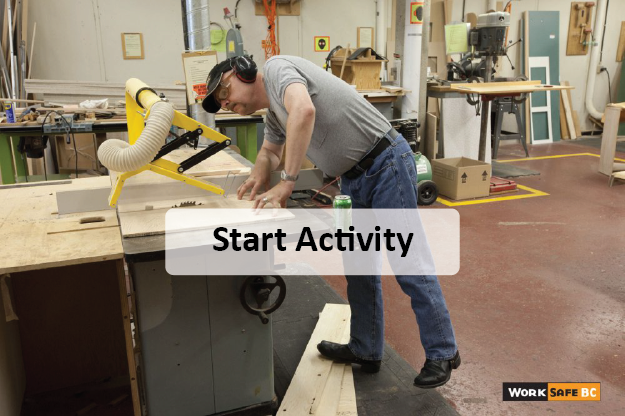
What's wrong with this photo?
How many safety hazards can you find? Click on the image below to open the activity in a new window.
Idea Log
How many issues did you identify? What did you miss?
Describe a time when you had a close call with injury. What do you do differently now because of it? This can be at home, at school, or at work.